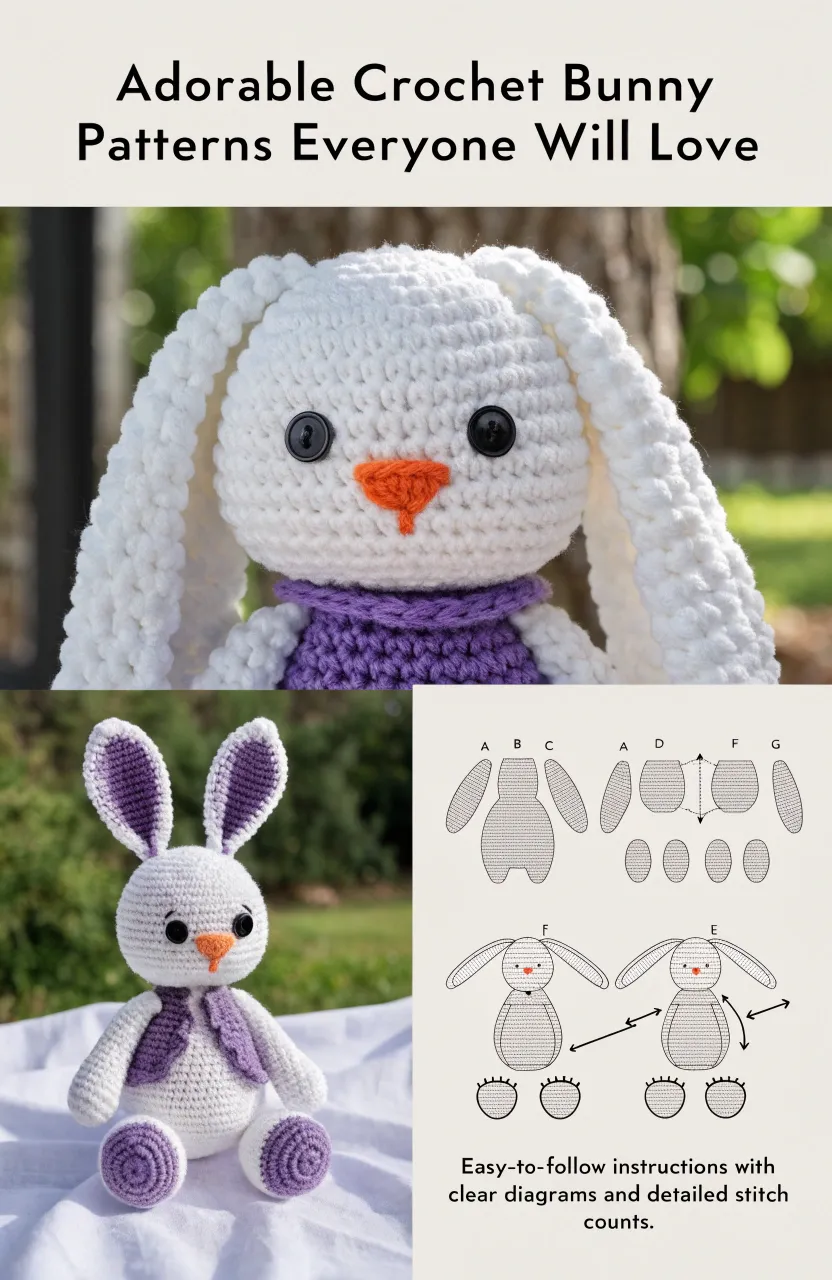
The most useful choices span pocket-sized keepsakes, festive gifts, soft companions, and a more detailed dressed design. Adorable Crochet Bunny Patterns Everyone Will Love can make a spring craft a personal Easter gift for kids or adults. An amigurumi is a crocheted or knitted stuffed character, often made in joined or continuous rounds.
Some projects suit a small basket or a backpack, while others become a cuddly friend. The right direction depends on who will receive the finished piece and how you want to use it. A handmade bunny can mark the season, brighten a shelf, or become a toy for everyday play.
Use the options below to find a project that fits your plans, from a quick keepsake to a character with extra clothing details. You can compare different shapes and formats before choosing the work you want to take on. Choose a project for the person who will use it, then decide how much shaping and assembly you want to take on.
Key Takeaways
- Seven designs range from tiny ornaments to dressed stuffed toys.
- Pattern access is free or paid, depending on the design.
- Most featured patterns carry an easy skill label.
- Loveys, treat bags, and backpacks offer alternatives to plush toys.
- Small changes to ears and features can shift a bunny’s look.
Adorable Crochet Bunny Patterns Everyone Will Love: Seven Picks for Different Makers
Seven distinct designs cover tiny pocket friends, dressed-up toys, a lovey, and a more detailed storybook-style bunny. Each bunny crochet pattern brings a different look to a handmade gift, whether you want a small keepsake or a character with clothes. Three are free, and four require paid access.
The table compares listed size, access, and standout details, so you can quickly spot a crochet pattern that suits your idea. Six designs are listed as easy, while Miti The Little Bunny is intermediate. The pattern descriptions also make clear whether a crochet bunny is an ornament, a lovey, or a more traditional stuffed toy.
| Pattern name | Designer | Listed size | Access | Distinctive design detail |
|---|---|---|---|---|
| Pocket Bunny | Spin a Yarn | Small | Free | Palm-sized format |
| Quick and Easy Easter Bunny | TheCrochetCodeAU | Medium | Paid | Color and appliqué options |
| Baby Bunny | Hainchan | Medium | Paid | Overalls |
| Bonnie The Bunny | shopModThreads | Medium | Paid | Low-sew lovey design |
| Bruna, The Bunny | Amour Fou | Medium | Free | Neutral tones and a bow |
| Some Bunny In the Hood | Once Upon a Cheerio | Small | Free | Can be used as an ornament |
| Miti The Little Bunny | Tites Mains de Khuccay | Medium | Paid | Long ears and suspenders |
Use the design detail column to picture the finished character, not just its basic bunny shape.
Pocket Bunny keeps the project compact, while the Easter design gives you room to play with colors and appliqués. Baby Bunny’s overalls add a dressed-up look without changing its basic identity as a stuffed friend. Those details can help you choose a pattern that feels personal to its recipient.
Bonnie The Bunny combines a bunny feature with a flatter lovey form and is designed for low sewing. Bruna, The Bunny pairs subdued colors with a bow, while Some Bunny In the Hood can decorate a seasonal display. Miti’s long ears and suspenders give it a more storybook appearance.
A free crochet pattern can reduce the cost of getting started, while paid access offers a different route to a design you like. Check the pattern’s listed details before choosing, especially when the finished shape matters more than a particular character feature. The words “free” and “paid” apply to access to the pattern itself.
Pattern availability tells you whether the instructions are free or paid, not what materials you may need. Free and paid describe pattern access, not the yarn or tools you may need for the project.
Which Bunny Crochet Pattern Fits Your Skill Level?
Most of the featured choices are labeled easy, while Miti The Little Bunny is the intermediate option for makers ready for more detail. An easy label is a starting point, not a guarantee that every part will feel simple. The best bunny crochet pattern for you matches both your stitch experience and your comfort with assembly.
Look at the construction steps, not only the skill label, before you begin. A beginner amigurumi commonly uses a magic ring and continuous rounds, which means you work around the piece without turning after every row. If those techniques are new, reading the instructions first can help you spot unfamiliar steps.
Easy Patterns for First-Time Amigurumi
Easy designs often build the head and body from simple shapes, with a short list of pieces to join. That can make an easy make more approachable, though small parts and shaping still need close attention. A pattern that explains each step clearly may feel easier than one with fewer pages but little guidance.
Before starting, scan the instructions for these four details:
- Construction method, such as joined or continuous rounds.
- Stitch abbreviations and any special stitches.
- Number of separate pieces you must assemble.
- Whether photos or video show the key steps.
This quick read helps you prepare for the parts that may take the most focus. It also shows whether the pattern explains a technique in words or demonstrates it visually.
When an Intermediate Design Is a Better Fit
An intermediate pattern can suit you when you already know basic shaping and want more parts to manage. Longer ears, clothing, or extra details can add steps even when the main body uses familiar stitches. Miti is the featured intermediate option, so it may appeal if you want a more involved design.
Beginners can still try a pattern with a higher rating if they are comfortable learning as they go. Set aside time to check each section and understand how the pieces fit before stitching them together. If continuous rounds are new to you, practice marking the first stitch before beginning a toy.
Bunny Projects for Gifts, Easter, and Everyday Use
A lovey suits someone who wants a soft companion, while a treat bag turns a small present into a springtime container. The format changes the role of the bunny, from comfort object to wearable project or table accent. The examples below offer options for an Easter gift and for use beyond the holiday.
Choose the project by what the recipient will do with it. A plush toy can become a companion, while a bag gives sweets or small gifts a themed wrap. A flat seasonal piece can add a bunny touch to an Easter table or hide an egg surprise.
Soft Companions and Wearable Projects
Crochet Bunny Lovey by Alisia Toys combines a bunny feature with a flatter comforter-style body. Bunny Butt Backpack by One Paisley Pig turns the animal shape into something you can wear. Both make the finished project useful in a different way than a conventional stuffed toy.
Seasonal Decorations and Treat Containers
Nibble Nibble, Hop Hop by The Green Dragonfly can suit an Easter table or an egg surprise. Bunny Treat Bag by Miss Mary MAC designs holds sweets or small gifts, making the container part of the presentation. If you want to find free crochet options, Nibble Nibble, Hop Hop is the free example here.
| Project format | Pattern example | Listed size | Skill level | Access |
|---|---|---|---|---|
| Soft companion | Crochet Bunny Lovey | Medium | Easy | Paid |
| Wearable project | Bunny Butt Backpack | Large | Intermediate | Paid |
| Table accent or egg surprise | Nibble Nibble, Hop Hop | Small | Easy | Free |
| Treat container | Bunny Treat Bag | Medium | Easy | Paid |
For a child who enjoys carrying treasures, a backpack makes the bunny part of an outing. For a seasonal meal, a small decorative project can sit beside place settings or eggs. A treat bag holds the surprise, while a plush bunny is the gift itself.
Yarn, Hook, and Safety Choices for Amigurumi
A tight fabric matters in amigurumi because visible gaps can let stuffing push through. Dense stitches help the finished toy hold its shape and keep the filling inside. Yarn weight and toy size both affect hook choice and the amount of yarn you need.
DK amigurumi commonly uses a 2.5-3.5 mm hook. That range is a useful starting point, but your stitches should still make a close fabric with the yarn you choose. A bunny usually takes one or two balls, depending on its size and the yarn weight.
Choose Yarn and a Hook That Keep Stuffing Hidden
Amigurumi commonly uses continuous rounds, stitch markers, increases, and invisible decreases. Increases add stitches to widen a shape, while invisible decreases join stitches with less visible bulk. A marker helps you track the first stitch as the rounds build.
Different yarn weights can change the scale of the finished bunny, and thicker yarn may need a larger hook. A hook that is too large for the yarn can leave holes between stitches. The pattern’s suggested materials offer a useful starting point for matching yarn and hook.
For children’s toys, plan the face and attachments with care before closing the parts. Use this four-point checklist when the toy is intended for young children:
- Embroider facial features instead of adding loose pieces.
- Avoid buttons and beads.
- Fit any safety eyes before closing the head.
- Sew ears, limbs, and other attachments securely.
Finish Faces and Attachments With Care
Place eyes evenly and check their position from the front before finishing the head. Once the stuffing is inside, reaching the back of an eye fitting can be difficult. Embroidered features give you more control over the expression and avoid small hard parts.
Pull attachment stitches snugly and weave the yarn ends into the body. A loose seam can make an ear or limb shift during play, changing the look of the toy. For a toy that will see regular play, check the yarn label for machine washability before starting.
Ways to Customize a Bunny’s Size and Style
Squish Bunnies let you choose between a regular or mini body and upright or floppy ears. One body design can take on a different expression through those simple choices. The regular bunny measures 5 inches tall, excluding its ears, while the mini measures approximately 3 inches, excluding its ears.
The mini version took under 30 minutes in the maker’s timed example, but that is not a promise for every maker. Your pace and familiarity with the stitches can change how long the project takes. The smaller form may suit a quick little bunny, while the regular size gives the body more presence.
You can also choose upright ears for an alert look or floppy ears for a softer silhouette. These changes use the same core body design, so you can explore a different style without choosing another body pattern. The ear shape is one of the most visible choices on the finished bunny.
Optional arms and a tail let you decide how much extra detail to add. Leaving them out keeps the shape simpler, while including them gives the character more distinct features. Think about how the bunny will be displayed or handled before deciding which parts to attach.
Colors can further change the character’s mood without changing its construction. A neutral body can keep attention on the ears, while a brighter shade makes the bunny stand out on a shelf. If you want to find free patterns for similar variations, compare the feature details before choosing a new design.
Changing ears, arms, or a tail can create a distinct version without requiring a different body pattern.
When you compare a bunny amigurumi with another pattern, look at how each design handles its head and body before borrowing a feature. A small change in the ears can give the finished character a new look without adding more pieces to the main shape. Choose the ear shape first, since it changes the bunny’s expression without changing the core body design.
Conclusion
The right bunny project is the one whose finished form suits both its maker and the person who will receive it. A handmade gift can be a seasonal decoration, a small keepsake, or a companion for regular play. Choose by intended use first, then consider how much construction you want to handle.
Before you begin, read the crochet pattern through once and set out the materials it names. That first check can reveal unfamiliar stitches or several pieces that need assembly, giving you a chance to prepare. Choose a pattern, gather its listed yarn and tools, and set up a stitch marker before the first round.
FAQ
How much yarn does a crochet bunny usually need?
A crochet bunny usually takes one or two balls of yarn. The exact amount depends on the finished size and the yarn weight: a larger bunny generally uses more, and heavier yarn can take more yardage for the same design. Check the pattern’s yarn notes before starting, especially if you want to use a different weight or make a larger version.
What is the difference between an amigurumi bunny and a bunny lovey?
An amigurumi bunny is a shaped, stuffed toy, while a bunny lovey combines a bunny feature with a flatter blanket or comforter. The stuffed toy has a three-dimensional body, often worked in rounds. A lovey usually has a soft, flat section that gives the project a different feel and function from a plush character.
Can I resize a bunny pattern by changing yarn?
Yes, heavier yarn can make a bunny larger, but you should also adjust the hook to keep the fabric dense. A hook that is too large can leave visible gaps between stitches, which may expose the stuffing. Changing yarn weight can alter the finished proportions, so check how the ears and other parts look as you work.
Can I sell finished toys made from a crochet pattern?
Check the individual designer’s terms, because permission to sell finished toys can vary from pattern to pattern. Some designers allow sales of handmade items, while others may set limits or ask for credit. Read the terms that come with the instructions before listing a toy for sale, and follow any conditions they set.
How can I start a crochet project without a magic ring?
You can use a chain-two start and work the first round into the second chain. This common alternative avoids making a magic ring, though the center may be less adjustable and leave a small opening. Pull the starting tail snug if the pattern allows, then continue following the round count and shaping instructions.
Can I use plush or chenille yarn for an amigurumi bunny?
Yes, plush or chenille yarn can make an amigurumi bunny with a soft, fuzzy surface. Its thick texture can make individual stitches harder to see and count, so use a stitch marker and feel for each stitch as you work. The yarn’s thickness can also change the toy’s finished size compared with the pattern’s sample.