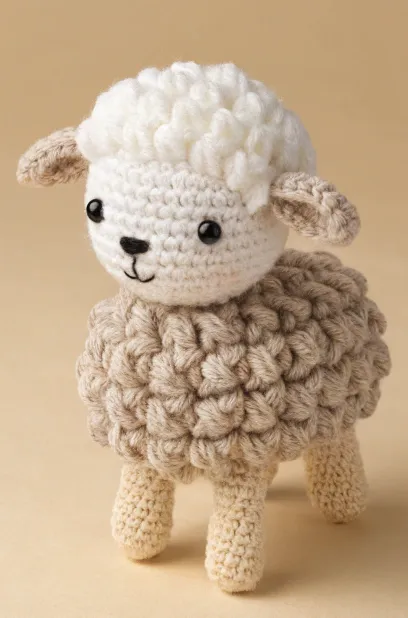
Crochet lamb patterns offer gift makers a choice of cuddly loveys, lamb-and-blanket sets, and stand-alone toys for different skill levels. These soft projects suit a baby’s first keepsake, family gifts, or a handmade surprise for friends. Small loveys pair a little lamb with a blanket, while separate amigurumi toys put the animal at the center.
You can choose a simple shape or a textured fleece, depending on the stitches you enjoy and the time you have. Some projects are designed as baby gifts, while others make playful additions to a shelf or toy collection. A pattern’s stated skill level and finished size are the two quickest ways to narrow your gift choices.
Key Takeaways
- Loveys combine a small lamb with an attached blanket.
- Stand-alone amigurumi patterns make stuffed sheep or lambs.
- Skill labels are useful, but stitch techniques matter too.
- Compare blanket size separately from the toy’s size.
- Follow the pattern’s yarn, hook, gauge, and finishing notes.
How to Match a Pattern to Your Crochet Skill
A beginner baby lamb-and-blanket design is a clearer starting point than a pattern rated intermediate if bobble stitches or shaping are new to you. Skill labels help, but the stitch texture, joining, and round-by-round detail also affect how a project feels to make.
A bobble stitch is a raised crochet stitch made by working several partial stitches into one stitch and closing them together. It creates a rounded texture, though keeping the stitches even can take practice. Read the technique list as well as the rating before choosing a pattern.
Read the skill label alongside the stitch demands
Liam the Lamb’s baby lovey is rated intermediate, as is the 28cm-square crochet lamb lovey. The baby lamb and blanket pattern is rated beginner, while the chunky sheep security blanket is rated Level 2 – Easy (Beginner+). Those labels describe each pattern’s own difficulty scale, so they are not interchangeable.
Before committing, look for shaping, increases, decreases, joining, and instructions that ask you to track several rounds. A familiar stitch can still become demanding when the pattern uses it across many small pieces. For a newer crocheter, a clear sequence of simple stitches may be easier than a short pattern with unfamiliar texture.
Choose texture before adding complexity
Choosing only by a pattern’s skill label can leave you surprised by a texture technique you have never worked.
A sheep design with bobble fleece may suit you if you already enjoy raised stitches. If not, a smoother stitch can let you focus on shaping and assembly first. A crochet pattern that explains its stitches clearly can also make a new technique easier to learn, even when the overall rating is higher.
Check whether the pattern explains its abbreviations and how to join rounds. Before starting, check whether the pattern asks you to make and attach several separate pieces.
Crochet Lamb Patterns for Loveys and Baby Gifts
For a blanket-first gift, compare the blanket dimensions separately from the attached lamb’s dimensions. The blanket measurement tells you about the fabric a child can hold, while the toy’s dimensions describe the animal itself. Those numbers answer different questions, so compare the specific measurement you need.
| Project | Recorded measurement | What the measurement describes |
|---|---|---|
| Liam the Lamb | 55cm diameter | Star-shaped blanket |
| Square crochet lamb lovey | 28cm x 28cm blanket; lamb 10cm tall | Blanket and attached lamb |
| Baby lamb and matching blanket | Lamb 20cm across and 14cm tall; blanket 50 x 40cm | Lamb excludes tail and ears; blanket is separate |
| Chunky sheep security blanket | 17″ x 17″ | Blanket |
The Liam project pairs its lamb with a star-shaped blanket, while the square crochet pattern uses a compact square. The baby lamb design lists the toy and matching blanket separately. Its lamb’s width excludes the tail, and its height excludes the ear, so those figures do not include every feature.
A blanket dimension is not the same as the toy’s size, even when both belong to one crochet pattern. Measurements also describe different directions, such as diameter, width, or height. Check whether a lamb measurement excludes features such as its tail or ears before judging the finished size.
Stand-Alone Lamb and Sheep Toys
Stand-alone toys are a good fit when you want the lamb itself, rather than a blanket, to be the center of the gift. These stuffed figures give you different fleece textures and details to choose from. A sheep crochet pattern can make a smooth toy, a bobble-covered animal, or a little lamb with changeable features.
Each design offers a different way to shape the fleece or customize the animal. These options are useful if you are browsing animal crochet patterns for a particular look rather than an attached blanket.
- Sage the Sheep stands 13.5″ tall and has a bobble-textured fleece version or a simpler single crochet version.
- Farmyard Sheep lets you mix and match ram, ewe, and lamb details, including horns, tail, and contrast colors.
- The Cute Amigurumi Sheep Crochet Pattern uses bobble texture for its fleece.
Farmyard Sheep uses the pip stitch, a small bobble-like stitch worked as the fleece is crocheted. Its texture creates a firm fabric that helps keep stuffing from showing through. Pip stitch is a distinct fleece detail, rather than simply a larger bobble added on top of finished fabric.
Sage the Sheep gives you a choice between raised texture and single crochet fleece. Farmyard Sheep offers options for a ram, ewe, or lamb, with choices for horns, tail, and color contrast. For a toy you can customize, choose the design whose included options match the look you want to make.
Match Yarn, Hooks, and Gauge to the Pattern
The listed hook and yarn combination is the safest starting point for matching a pattern’s intended gauge and fabric. Follow the project’s details rather than assuming one hook size works for every crochet pattern. A hook changes stitch size, gauge, finished-project drape, texture, and size.
| Pattern setup | Yarn | Hook or gauge |
|---|---|---|
| Baby lamb | DMC Natura Just Cotton, 100% cotton; 1 x 50g (155m) ball in Ivory (N02) | 2.5mm hook |
| Sage the Sheep | Weight 4 acrylic; 342 total yards for bobble version, 254 total yards for single crochet version | 3.5mm E hook; optional 4.5mm hook |
| Little Crochet Lamb | Category 4 worsted weight yarn | 2mm and E crochet hooks |
Liam the Lamb uses Deramores Studio DK yarn with a 4.5mm crochet hook. The square lamb lovey uses light worsted #3 yarn, also described as DK/8 ply, with a 3mm (C/2) hook. Yarn labels can vary, so the stated yarn and gauge matter more than a name alone.
The chunky sheep security blanket uses weight 6 Super Bulky yarn. Its gauge is 7 stitches and 8 rows in single crochet per 4” x 4”. For worsted weight yarn, 5.0mm (H-8) or 5.5mm (I-9) are common starting hook sizes, but a pattern’s stated hook and gauge take priority.
One product-specific example is Panda Stuffing, listed as 100% polyester and machine washable at 40 °C. That description applies to this stuffing, not every filling used in amigurumi. Make a gauge swatch when the pattern provides a gauge, especially before committing to a larger blanket.
Safety and Finishing for Baby-Facing Projects
Embroidered eyes are the recommended choice in the crochet lamb lovey pattern for children under age 3 because safety eyes and buttons pose a choking risk. Age matters when you decide how to finish a toy, even if another pattern specifies a different detail.
The Liam the Lamb baby lovey pattern calls for 10mm black doll safety eyes. That specification describes the pattern, but it does not replace age-appropriate judgment about the child who will use the toy. Choose finishing details with the recipient’s age and use in mind.
Embroidered details for younger children
Embroidery avoids adding a separate button or safety eye, which can pose a choking risk for children under age 3. Keep embroidered features firmly stitched, with no loose thread ends. A finished face should also fit the toy’s intended look without relying on parts that can come loose.
Patterns can call for different eyes, so treat the written instructions as construction details rather than a guarantee of suitability for every child. The same care applies to ears, limbs, and any other attached pieces. A well-finished toy still needs an age-appropriate decision from the person giving it.
Secure stuffing and washable materials
Use this checklist as you finish a baby-facing toy:
- Choose embroidered details or assess the specified eyes for the recipient’s age.
- Check that attached parts are firmly joined and have no loose ends.
- Make sure stuffing stays contained inside the crocheted fabric.
- Follow care instructions for the yarn and stuffing actually used.
Washing directions depend on the materials in the finished toy, not on a general promise about all yarn or stuffing. Secure finishing is an important check, but it cannot guarantee that a toy is suitable for every child. Before gifting the finished toy, inspect every attached feature and follow the care directions for its materials.
Build Plush Fleece With Bobble Stitches
A row of bobbles looks clearer when the raised stitches have room to stand apart. Spacing matters because tight clusters can blur the fleece texture. In amigurumi, stitch size also affects how the fabric holds its shape and how the finished surface looks.
Sage the Sheep’s bobble version places a single crochet between bobbles. The bobble rounds are joined, and a single crochet round separates one bobble round from the next. That spacing helps the bobbles stand out instead of crowding together.
Keep bobbles aligned and distinct
Work the single crochet between each raised stitch as the pattern directs, then keep the round construction consistent. The tight stitches between bobbles help the texture stay distinct and reduce gaps. If a bobble row begins to look uneven, compare its placement with the previous round before adding more texture.
Amigurumi often benefits from a smaller hook because it can tighten stitches and keep stuffing from showing through the fabric. A smaller hook also changes the fabric, though, so the pattern’s stated hook and gauge still matter. Use the specified setup as your reference instead of changing hook size by habit.
Choose a simpler stitch version when needed
Sage the Sheep also has a single crochet version for crocheters who do not want to work bobbles. That option keeps the fleece simpler while using the same general project idea. Choosing a smooth stitch can make the texture easier to manage when you would rather focus on shaping.
Bobble stitch creates depth, but each raised stitch needs clear space around it to show. The rounds also need to follow the pattern’s joining instructions, rather than being treated as interchangeable rows. If the texture is becoming crowded, pause and check the spacing and round construction before continuing.
Make Written Instructions and Videos Work Together
A video can clarify hand movement, while the written pattern remains the reference for that project’s stitch counts and construction. Use both with purpose: a demonstration can show how a stitch is formed, while the instructions keep the project’s details consistent.
Sage the Sheep has a video crochet-along, and Lucy the Sheep Crochet Pattern Video and Sweet Little Lamb Tutorial are named video resources. They are examples of available videos, not a promise that every demonstration matches every written pattern. A video for a different pattern may use different counts or construction.
- Read the written instructions through once before you begin.
- Mark unfamiliar abbreviations or steps so you can find them quickly.
- Use a matching video where the technique is unclear, then return to the written pattern and check stitch counts.
Following a video for a different pattern and assuming its stitch counts or construction are interchangeable can lead to mismatched pieces.
Some tutorials show hand movements more clearly than a still picture, while written instructions make it easier to track counts. Keep the names of the pattern and technique in view when you choose a demonstration. A useful video supports the written pattern; it does not replace that project’s own steps.
Check that a tutorial demonstrates the exact technique you need, such as a bobble or a joining method. A video’s order of work may differ from another pattern’s instructions. Match the demonstration to the exact technique you need rather than borrowing its counts for another pattern.
Conclusion
The right project is the one whose finished form, skill demands, and materials fit the person you are making it for. Your comfort level matters: choose crochet patterns with stitches and construction you feel ready to tackle.
Think about whether the recipient would enjoy a blanket-and-toy combination or a separate stuffed figure. The form of a handmade gift should suit how the person may use or display it. Your second takeaway is to choose materials that match both the instructions and your own crochet experience.
Before gathering supplies, read the pattern’s material list and skill notes from beginning to end. That quick check can show whether the yarn, hook, and techniques suit your plans. Choose one pattern, check its materials and skill notes, and gather the specified supplies before beginning.
FAQ
Is DK yarn the same as light worsted yarn?
DK yarn and light worsted yarn are sometimes used as similar labels, but the terms can vary across yarn lines. The square lamb lovey describes its light worsted #3 yarn as DK/8 ply. Follow the pattern’s stated yarn and gauge, since those details describe the fabric the designer intended more clearly than a label alone.
Can I use a smaller crochet hook than a pattern recommends?
Yes, a smaller hook can make tighter amigurumi stitches and help keep stuffing from showing through the fabric. Changing hook size can also alter gauge, texture, drape, and finished size. Use the pattern’s stated hook as your starting point, then check a gauge swatch when the instructions provide one before changing your setup.
Do bobble stitches use more yarn than single crochet?
Bobble stitches create raised texture, while single crochet makes a flatter surface. Yarn use can differ between stitch patterns, but the amount depends on the pattern and its construction. A specific yardage difference cannot be assumed from the stitch names alone, so use the yarn amount listed for the version you plan to make.
How can I make a crocheted sheep smaller?
Farmyard Sheep suggests using finer yarn with a smaller hook to make a smaller lamb. Changing those materials also changes the finished fabric, including its firmness and texture. Keep the new yarn and hook consistent throughout the project, and remember that the pattern’s original dimensions will no longer describe the altered toy.
Is a lamb lovey different from an amigurumi lamb toy?
Yes, a lamb lovey combines a small toy with an attached blanket, while a stand-alone amigurumi lamb is a stuffed figure without that blanket. The lovey’s measurements describe both the blanket and the attached animal, which are separate parts. A stand-alone toy’s recorded size describes the stuffed figure itself.
What should I do if a crochet video does not match my written pattern?
Check whether the video demonstrates the same pattern or the exact technique you need, then rely on your written pattern for its stitch counts and construction. Videos can use a different order or method, even when the finished animal looks similar. Do not transfer another pattern’s counts to your project without matching its instructions.