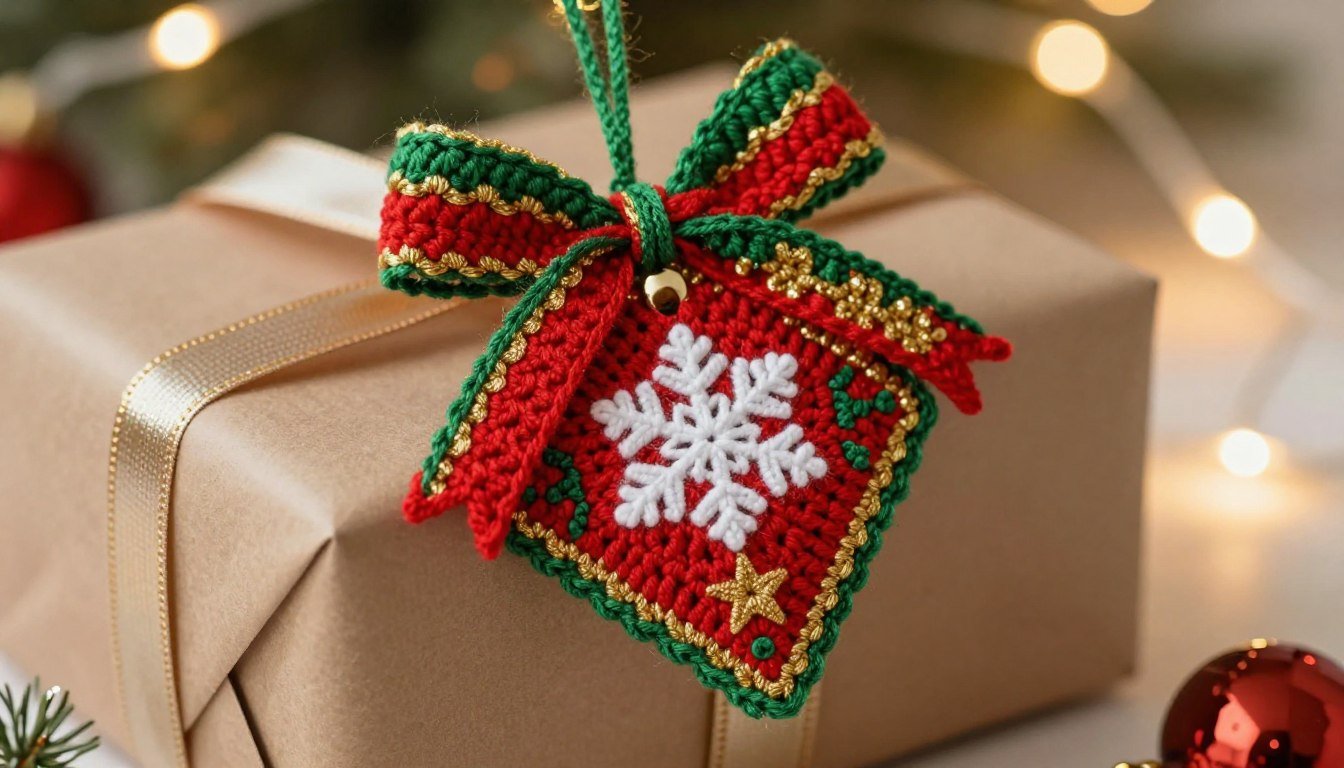
A small handmade crochet piece can become a personal gift, a tree decoration, or a memorable gift topper. Beautiful Crochet Christmas Ornaments to Gift With Love suit relatives, friends, teachers, and anyone who enjoys a thoughtful holiday keepsake.
Gauge is the number of stitches and rows in a measured area, used to check the finished size. That check matters when you want a small ornament to fit a particular display or gift. You can choose a quick, simple shape or spend more time on a keepsake-style design with personal meaning.
Handmade gifts feel personal because you choose the details, from the shape to the colors. A finished ornament can hang on a Christmas tree, sit on a shelf, or add a little extra care to a wrapped present. These ideas suit newer crocheters and experienced makers alike.
Key Takeaways
- Choose a shape that suits the recipient and the way they will use it.
- Flat motifs and dimensional figures offer different looks and construction needs.
- Check the pattern’s finishing steps before you begin.
- Test gauge when a project needs to fit around a clear ornament.
- Match stuffing care to the yarn covering the ornament.
- Use a hanging loop to make a finished piece a gift topper or tree decoration.
Choose a design that reflects the recipient’s interests, then make it in colors they will enjoy.
Beautiful Crochet Christmas Ornaments to Gift With Love: How to Choose a Style
Match the project to the person first, then choose a design whose construction suits your time and crochet experience. Flat motifs suit a simple, lightweight look, while dimensional amigurumi gives you a small figure with more shape.
Beautiful Crochet Christmas Ornaments to Gift With Love can reflect a hobby, favorite animal, or familiar holiday tradition. Think about whether the recipient will hang the ornament on a tree, display it on a shelf, or use it as a small gift accent. The best pattern fits both the recipient and your comfort with assembly.
A flat motif may require fewer parts to join, though its edges and hanging loop still need neat finishing. A dimensional project can make a charming keepsake, but often involves shaping, sewing, or adding details. Nearly any small amigurumi can become an ornament when you add a hanging loop.
Do not choose a pattern by its photo alone. Check how it is constructed and what finishing the pictured result requires.
Look beyond the finished image to see whether the pattern uses pieces that must be joined, a base that must be covered, or details that need careful placement. A polished photo can hide a more involved process. The written instructions reveal whether the project matches your available time.
Your crafting comfort matters as much as the final look. If you enjoy joining small pieces, a dimensional figure may be satisfying. If you prefer working in one continuous shape, choose a pattern with fewer assembly steps. The intended use also helps: a tree ornament needs a secure way to hang.
A pattern may show an ornament resting on a surface, but that does not confirm it includes a loop. Some projects need you to add one. Consider how the figure will hang and whether its shape will face outward on the tree, rather than turning sideways.
Check the pattern’s assembly and hanging-loop instructions before committing to a design.
Fast, Beginner-Friendly Patterns for Last-Minute Gifts
A small motif made with familiar stitches is a sensible first handmade gift. Basic shapes are easier to follow when you are working between other holiday plans, and some free crochet patterns keep the construction straightforward.
Simple crochet patterns can still look thoughtful when you choose colors with the recipient in mind. A crochet Christmas tree ornament uses basic single and double crochet, and simple crochet bells also rely on basic stitches. Beginner-friendly does not mean skipping the finishing work.
Start with simple stitches and flat shapes
Flat shapes often avoid the stuffing and shaping used for dimensional figures. They make approachable gifts when you want a recognizable holiday look without assembling several parts. The picks below include a mix of simple silhouettes and projects with a little more finishing.
- A simple crochet tree uses basic stitches, including single and double crochet.
- Crochet bells use familiar stitches to make a classic holiday shape.
- A mini Santa hat gives a familiar piece of winter clothing a miniature form.
- A crochet angel combines basic stitches with a magic circle for its shape.
Pick small designs with straightforward finishing
The tree and bells offer familiar shapes, while the hat and angel have details that can call for more assembly. A pattern’s skill label is only part of the picture. Check how many pieces you will join and whether the finishing involves small attached details or a separate hanging loop.
Make the first few stitches slowly enough to keep your edges even. If a pattern repeats the same stitch sequence, marking the start of a round can help you follow it. Use the written instructions to track shaping rather than relying on a finished photo alone.
A neat finish gives even a simple project a cared-for look. Weave in loose ends, secure any attached pieces, and make the hanging loop consistent with the pattern. These small steps help a quick gift look ready to display, rather than like a work in progress.
Read through the finishing instructions before starting, especially if the design needs a hanging loop or attached details.
Baubles and Snow Globes for a Coordinated Christmas Tree
Rounded baubles make it easy to build a matching set from a few yarn colors and textures. A shared palette can tie different crochet Christmas ornaments together, even when their patterns use different methods.
Choose the finish you want before making several pieces. A chenille cover has a soft, plush look, while beadwork adds shine and texture. Easy Crochet Christmas Baubles can use acrylic or cotton yarn, so the finish depends partly on the yarn you choose. Not every bauble pattern is built the same way.
These four picks offer distinct surfaces and construction styles for a tree or a small set of gifts:
- Chunky Crochet Ball Ornaments use chenille yarn and continuous rounds for a soft, textured finish.
- Easy Crochet Christmas Baubles can be made with acrylic or cotton yarn for a familiar rounded look.
- Boho Christmas Crochet Baubles offer a different decorative style for a more relaxed tree theme.
- Pony Bead Ornaments are crocheted around plastic fillable ornaments, with beads added during the crochet work.
Those differences can make a set look collected rather than identical. Chenille brings a plush texture; beads add a bright, raised detail. A simpler bauble can balance a more decorated one, while a consistent color choice keeps the whole group visually connected.
For a coordinated tree, choose two or three main colors and repeat them across the different designs. You can vary the yarn texture or decorative finish without adding a new color to every ornament. Place one finished sample beside the other decorations you plan to use.
A set can also work as several small gifts, especially when you vary one detail for each recipient. Keep the base palette steady, then change a stripe or accent color. That small difference makes each piece feel considered without making the group look unrelated.
Make one sample before beginning a full set so you can check how its colors and finish look together.
Snowmen and Reindeer Make Playful Keepsakes
A snowman or reindeer makes a playful keepsake for someone who loves familiar Christmas characters. Small character details help each figure feel different, even when the basic shape is recognizable.
The scale can influence where a finished ornament will fit. A crocheted snowman ornament is about 4 inches tall, while Pocket Reindeer is about 3.5 inches tall. Potato the Reindeer is about 4.7 inches tall. Check those finished dimensions against the display space.
Here are four choices for classic character gifts, from a compact reindeer to a slightly taller figure:
- A crocheted snowman ornament stands about 4 inches tall and offers a familiar winter character.
- Baby Snowman gives you a smaller, youthful take on the classic snowman design.
- Pocket Reindeer is about 3.5 inches tall, making it the smallest of these measured figures.
- Potato the Reindeer is about 4.7 inches tall, giving it a little more presence on display.
Even figures with similar themes can have their own personalities. A scarf can suggest a bundled-up character, while a hat changes the silhouette and mood. Color choices also make a familiar design feel more closely matched to the person who will receive it.
Think about how the ornament will be displayed before you settle on a pattern. A small tree may suit a more compact piece, while a shelf can give a taller figure more room. If the recipient collects holiday decorations, consider how the new piece will sit beside what they already own.
Each design also brings its own finishing needs. Follow the pattern for shaping and attached details so the features stay clear. The result can feel playful without needing a complicated design, especially when the character’s accessories are tidy and easy to recognize.
Check the finished dimensions against the recipient’s intended display space before choosing the pattern.
Animal Amigurumi Gives Each Recipient a Character
An animal ornament feels especially personal when its character connects to the recipient’s favorite animal or sense of humor. A recognizable face or pose can make a small amigurumi feel chosen for one person.
Holiday animal crochet patterns range from familiar winter creatures to unexpected little companions. The key is to choose a pattern whose details will remain visible at its finished scale. Distinctive features need enough space to read clearly.
Choose a recognizable holiday animal
Classic animal shapes can suit recipients who already have a favorite creature or enjoy playful decorations. These ideas bring different personalities to a tree without relying on the same character style:
- Sleepy Sloth hangs from its arm loops, giving the ornament a relaxed pose.
- Penguin ornaments use a familiar winter bird shape that reads clearly at a glance.
- A Christmas kitty can bring a pet-inspired touch to holiday crochet.
- Animal-themed amigurumi lets you choose a character connected to the recipient’s interests.
Try a less expected character
A capybara can make a less traditional choice for someone who enjoys unusual animals. Its pattern is presented as a video tutorial, which suits makers who like to watch each step take shape. A mini Grinch offers a different kind of character, with a recognizable holiday personality.
Christmas amigurumi designs also include tiny holiday-themed animals, so you can use festive details without choosing a classic Christmas character. A scarf, hat, or seasonal color can signal the occasion while leaving the animal’s own shape at the center.
When a pattern is small, one clear detail may do more than several tiny additions. A recognizable outline, face, or pose can carry the idea. Before you start, look at the dimensions and the placement of the features, especially when they distinguish one character from another.
Choose a figure whose distinctive details will still read clearly at the ornament’s finished size.
Gingerbread and Candy-Cane Designs Suit Sweet-Tooth Gifts
Gingerbread and candy-cane motifs bring a playful, instantly recognizable look to a handmade gift. Small sweet details can make the design feel festive, though they may take longer to finish than the main shape.
These crochet gingerbread and candy cane ideas suit recipients who enjoy whimsical Christmas crochet. Some patterns use a simple silhouette, while others add several decorative pieces. Plan time for tiny details as well as the main shape.
Try one of these four sweet-themed ornament patterns, each with a different shape or use:
- A Crochet Gingerbread House Ornament has three parts: a house, a roof, and a heart appliqué. French knots create its gumdrop details.
- A gingerbread man amigurumi turns the familiar cookie shape into a small stuffed figure.
- Gingerbread boy and girl candy-cane holders can serve as gift tags or tree decorations.
- A peppermint snail pairs a whimsical animal shape with a candy-inspired design.
The house pattern’s three separate parts give it a layered appearance, while French knots add the small gumdrop accents. Those knots are tiny, but they help define the look. On a gingerbread figure, features and icing-style details can also call for careful placement.
Candy-cane holders add a practical twist to the theme. Their shape can frame a candy cane, while their gingerbread characters also work as decorations. A peppermint snail offers a more unusual silhouette for someone who likes a playful surprise on the tree.
Decorative work can take a larger share of the project than expected. Set out the small details before attaching them, so you can see how they will fit the finished shape. Consistent spacing helps the design look intentional, especially when several tiny accents sit close together.
Leave enough time to attach small decorations neatly instead of rushing the final details.
Trees, Wreaths, Bells, and Stars for Traditional Decor
Traditional motifs such as stars, wreaths, and pine cones make a tree feel festive without relying on character designs. Repeated shapes can give a tree or mantel a clear theme, even when each ornament has small differences.
A star ornament pattern uses four rounds and measures about 4 inches across. A crochet pine-cone ornament uses crocodile stitch, which creates a layered surface. Repeating one motif or garland can carry a visual theme across a display.
Consider these four options if you prefer classic Christmas decorations:
- A crochet star offers a familiar shape; one pattern uses four rounds and measures about 4 inches across.
- A pine cone ornament uses crocodile stitch for a layered, nature-inspired texture.
- A wreath brings a round, traditional form to the tree or a holiday display.
- A retro ornament garland repeats small motifs to make a longer decoration.
A repeated star can create a simple pattern across the tree, while a garland carries the same look along a mantel. If you combine a wreath, pine cone, and star, repeating a few colors can help them feel like part of one collection.
Traditional motifs work well when you want a festive look without a character’s face or costume. Their shapes can stand on their own, or you can use small changes in color to distinguish one piece from another. A single repeated detail can make a mixed group feel more connected.
Lay the finished motifs together before hanging them. This quick visual check helps you see whether the colors and textures work as a group. It also shows whether a garland needs more space or whether a motif looks best as a separate accent.
Use a consistent palette if you want separate motifs to read as one coordinated collection.
Mini Sweaters, Hats, Mittens, and Stockings Make Cozy Gifts
Miniature winter clothes make a charming gift for someone whose holiday style includes sweaters, mittens, or stockings. Wearable-inspired shapes feel personal without needing a character face or a complicated scene.
Small garments give you room to play with stripes and familiar winter colors. A mini sweater pattern may use worsted-weight yarn, while other designs may call for different materials. Careful finishing keeps narrow stripes and small details tidy.
These four picks suit recipients who enjoy cozy clothes and festive details:
- A mini Christmas sweater gives you a small canvas for stripes or a simple color motif.
- Crochet mittens bring a familiar winter accessory to the tree.
- Mini stockings can echo the larger decorations used around the home.
- The Suffragette Hat ornament measures about 3 inches in diameter and uses 12 yards of sport-weight yarn with a size F hook.
The Suffragette Hat’s compact dimensions make it a distinct choice among wearable-inspired ornaments. Its stated materials give you a clear starting point for that pattern. For a mini sweater, worsted-weight yarn can create a different surface and scale, so follow the pattern’s construction and sizing directions.
Color changes make these small designs easy to personalize. You can echo a recipient’s favorite colors or use familiar seasonal shades. Narrow stripes require attention as you work, since loose ends and uneven changes can distract from a tidy garment shape.
Think about where each color change falls before you begin. A planned stripe sequence helps you keep the front and back consistent. It can also help you place a contrasting detail where it will be visible once the finished ornament hangs.
Plan color changes before you begin so narrow stripes do not become a last-minute finishing problem.
Personal and Heirloom-Style Ornaments Carry Memories
A keepsake ornament can hold a memory of a person, place, or moment without needing an elaborate design. One personal detail can make a small gift feel meaningful to the person who receives it.
Choose a photo, a significant color, or a motif that recalls something you share. Vintage-style crochet ornaments can offer an heirloom-inspired look, while a simple original shape can point to a memory without spelling out a whole story. Personal meaning can come from a small, deliberate detail.
Here are four approaches for making a more personal holiday gift:
- A photo ornament can preserve an image connected to a person, place, or moment.
- An angel with personal meaning can mark a memory through its design or chosen colors.
- A vintage-style design can give a new ornament an heirloom-inspired appearance.
- An original motif can represent a shared memory through a recognizable shape or color.
A Crochet Snowman Ornament with Photo is a photo keepsake design with an optional scarf and bow. Those additions give you a way to change its appearance while keeping the photo central. The finished piece can feel personal through the image and one or two carefully chosen details.
An angel design may carry meaning through its role in a tradition or through a color that matters to you. A vintage-style pattern offers another route, especially if you want a keepsake that looks at home beside older decorations. You can also create an original motif tied to a shared memory.
Keep the design clear enough that the personal detail remains visible. A single chosen color or recognizable motif may tell the story better than several competing accents. If the ornament marks a particular year, add that detail in a way that suits the design.
Add a short handwritten note naming the memory the ornament is meant to preserve.
Yarn, Hook, Size, and Construction Shape the Finished Ornament
Start with the pattern’s recommended yarn and hook, then check whether its finished size suits the intended use. Fit matters most when a crocheted cover must stretch over a clear base or match a particular display space.
Yarn weight and hook size affect the fabric and finished dimensions. A crochet ball ornament uses size 5 bulky yarn, an 8 mm hook, and a clear 8 cm or 10 cm ornament. Changing yarn without checking the base can leave the cover too loose or too tight.
Match yarn and hook to the intended size
The ball pattern uses about 30 yards of yarn for the small size and 50 yards for the large size. A heart ornament uses worsted-weight yarn and a 5 mm hook. Those examples show why the stated yarn and hook are part of the fit, not just a shopping list.
A wreath tutorial uses medium-weight yarn with a 2-inch bangle or ring. A vintage-style ornament uses worsted-weight cotton yarn and suits advanced beginners. The recommended materials help set the look and size, while the construction tells you how closely the crochet must fit its base.
Check gauge and how the ornament is assembled
Gauge can vary with your tension and yarn choice, so a measured swatch helps you compare your stitches with the pattern. The ball cover is worked in continuous rounds, stretched around a clear ornament, and cinched. Simpler projects may use single crochet or a magic ring instead.
A snow-globe ornament uses single crochet and a magic ring and takes about 15 minutes. A heart ornament’s largest size takes 5 to 10 minutes. The ball cover takes more steps because it must fit and close around a separate base.
| Project | Yarn and tool | Construction | Time or size |
|---|---|---|---|
| Crochet ball ornament | Size 5 bulky yarn, 8 mm hook, clear 8 cm or 10 cm ornament | Continuous rounds; stretch over base and cinch | 30 yards small; 50 yards large |
| Heart ornament | Worsted-weight yarn, 5 mm hook | Crocheted heart shape | Largest size takes 5 to 10 minutes |
| Snow-globe ornament | Single crochet and a magic ring | Small crocheted snow-globe shape | About 15 minutes |
| Wreath tutorial | Medium-weight yarn, 2-inch bangle or ring | Crochet worked around a ring | Uses a 2-inch base |
Read how the pattern uses its base before substituting materials. A cover that looks close in size may not stretch far enough to reach its opening or cinch securely. Make a gauge check before crocheting a full cover for a clear ornament.
Stuffing and Small-Part Safety Matter for Ornaments
Choose stuffing that can be cared for at least as gently as the yarn covering it. Washability matters if the ornament may need cleaning, while the stuffing’s color and feel affect how the finished piece looks and handles.
Clean, cut-up fabric scraps from worn T-shirts or sweaters offer a washable option when the fabric can be washed with the outer yarn. Tissue paper is lightweight, but it is not machine washable and colored tissue may show through pale yarn. Match stuffing care to the outer yarn.
Thin plastic bags are lightweight and washable, but they can crackle when squeezed. They are not recommended as stuffing for toys intended for small children or animals. Torn bags can pose choking or suffocation hazards. Keep this option separate from products meant for those users.
Polyester fiberfill gives a soft, familiar feel. Mountain Mist Fiberfill is 100% polyester, machine washable, and sold in 16-ounce bags for projects including crochet ornaments. Choose stuffing that works with the care needs of the yarn and the intended use of the finished piece.
Ornaments made for decoration are not automatically children’s products. The CPSC small-parts rule applies to children’s products intended for children under 3 when they present a choking, aspiration, or ingestion hazard from small parts. A small part is an object that fits entirely into the CPSC small-parts cylinder in any orientation without compression.
That distinction depends on the product’s intended use, not simply on whether it is crocheted. A decorative item may still have loose details, so consider who will handle it and where it will be displayed. Keep the safety rule clear when designing an item meant for very young children.
Colored tissue can also spread dye if it gets wet, which may stain pale yarn. Fabric scraps and fiberfill avoid that particular issue, though their care needs still matter. Check the finished ornament for loose small parts before giving it to someone who may handle it closely.
Keep loose small parts and torn plastic away from products intended for children under 3 and from animals.
Turn Ornaments Into Gift Toppers and Mail Them on Time
A crocheted ornament can become part of the wrapping when it doubles as a gift tag or topper. The added keepsake can also leave the recipient with a tree decoration after opening the present.
A crochet gift bow can start as a rectangle joined at its short ends, cinched in the center, then wrapped with yarn. A crochet gift tag can use a 10-chain hanging loop and a contrasting embroidered letter. Use the ornament as a tag, topper, or tree decoration.
Add a personal gift tag, topper, or bow
Choose a shape that lies neatly against the wrapping when you use it as a topper. A hanging loop gives you a place to thread ribbon or tie the piece to a package. A lettered tag can mark the recipient’s gift, while a bow adds a handmade finishing touch.
Once the present is opened, the same ornament can move to the Christmas tree. That gives the topper a second purpose rather than making it part of the wrapping alone. Keep the added decoration in scale with the package so it does not overwhelm a small gift.
Check USPS holiday dates and package limits
For expected Christmas delivery in the contiguous United States in 2026, USPS recommended these send-by dates. The dates are recommendations, not delivery guarantees.
| Service or route | Recommended 2026 send-by date | Delivery note |
|---|---|---|
| Ground Advantage, contiguous United States | December 17 | Recommended, not guaranteed |
| Priority Mail | December 18 | Recommended, not guaranteed |
| Priority Mail Express | December 19 | Recommended, not guaranteed |
| Ground Advantage to Alaska, Hawaii, Puerto Rico, and U.S. territories | December 16 | Some offshore routes may take 10 days or more |
For international packages, USPS recommends mailing by December 9, 2026, with First-Class Package International Service or Priority Mail International. The recommended date for Priority Mail Express International is December 16, 2026. Those dates apply to expected delivery before Christmas to covered destinations.
Own-box limits differ by service. First-Class Package International Service allows a box no longer than 24 inches, with length plus height plus thickness no more than 36 inches. Its maximum weight is 4 pounds, or 64 ounces.
| Service | Own-box size limit | Maximum weight |
|---|---|---|
| First-Class Package International Service | 24 inches long; length plus height plus thickness no more than 36 inches | 4 pounds or 64 ounces |
| Priority Mail International | Length plus girth under 108 inches | Flat-rate envelope 4 pounds; flat-rate box 20 pounds; weight-priced package 70 pounds |
| Priority Mail Express International | Length plus girth under 108 inches | Flat-rate envelope 4 pounds; weight-priced mailing box 70 pounds |
Destination-country limits may be lower than the USPS package limits.
Priority Mail International flat-rate boxes allow up to 20 pounds, while its flat-rate envelopes allow 4 pounds. Weight-priced packages allow up to 70 pounds. Priority Mail Express International flat-rate envelopes allow 4 pounds, and weight-priced mailing boxes allow 70 pounds.
Check the destination-specific restrictions and recommended mailing date before sending an international package.
Conclusion
A meaningful crochet gift can be a small shape made with care or a keepsake built around a personal memory. The thought behind it matters more than making the design complicated.
Choose a pattern that fits your time and the recipient’s display plans. Then set out the yarn, hook, and any finishing materials the pattern calls for. Having everything ready makes it easier to begin and keep the project moving.
A handmade ornament can become part of someone’s holiday traditions, whether it hangs on a tree or marks a moment worth remembering. Choose one design, gather its materials, and make the first stitch while you still have time to finish it for the holidays.