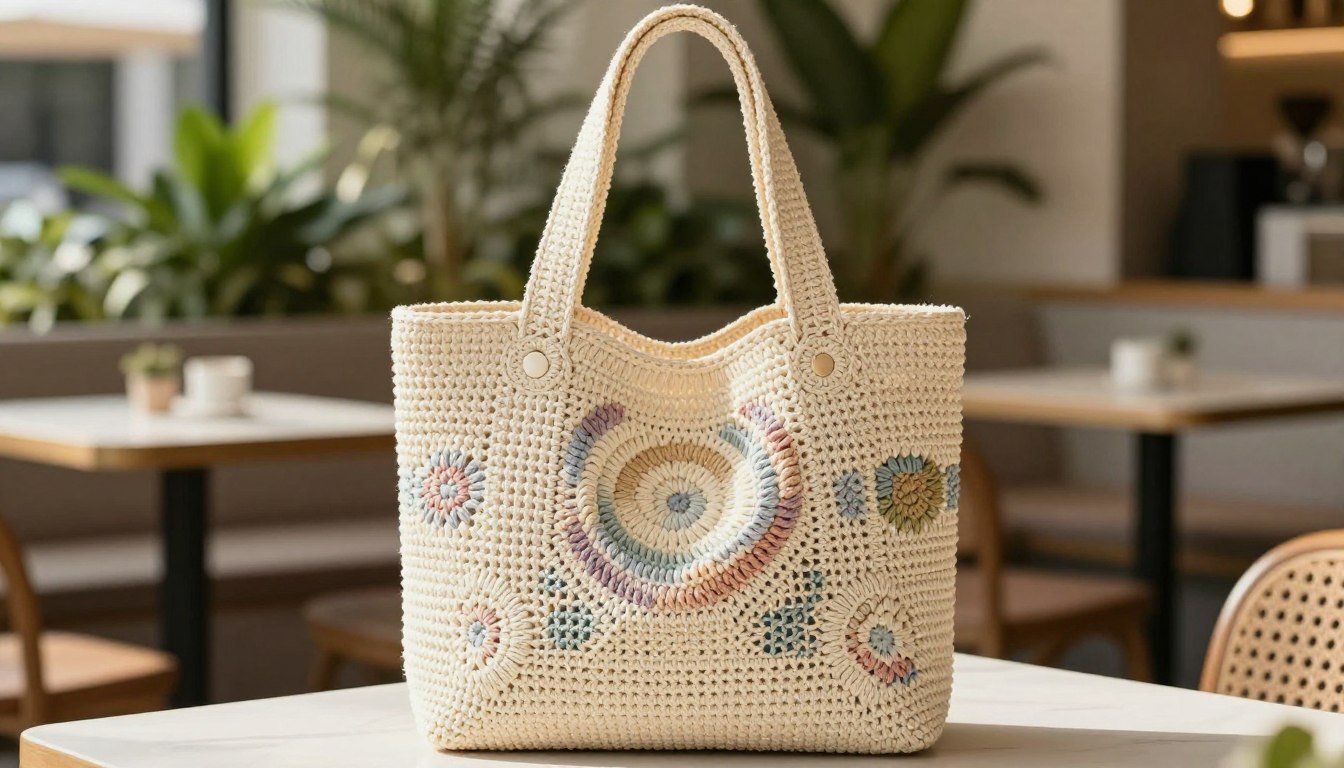
Clean-lined cotton totes, textured granny-square designs, and airy market styles are among the most versatile elegant choices, with ten looks to suit errands, markets, and weekends. Elegant Crochet Tote Bags Every Woman Will Love can make handmade accessories feel personal without giving up everyday usefulness.
The right shape depends on what you carry and how you prefer to wear a bag. A roomy tote can handle a market stop, while a compact style suits a light day out.
A useful first filter is whether the bag will carry daily essentials, shopping, or just a few small items.
Key Takeaways
- Choose a silhouette that fits your usual routine.
- Mesh uses less yarn than solid single-crochet fabric of the same size.
- A denser stitch gives small belongings more coverage.
- Check finished dimensions before starting a project.
- Reinforce the base and handle attachments for regular use.
- Follow the yarn label when caring for your finished bag.
Elegant Crochet Tote Bags Every Woman Will Love for Everyday Style
For a polished everyday look, start with a clean-lined tote or a simple striped shopper; for more personality, choose granny squares, geometric texture, or openwork. Each style direction can be adapted to your color preferences and routine.
These are design ideas, not specific retail products. A modern crochet bag can look neat or relaxed, depending on its shape, stitch pattern, and handles.
Think of these ten looks as design directions, not ready-made products, and choose the one that fits your routine.
Everyday and versatile options include:
- A minimalist solid-color tote pairs easily with work clothes and weekend outfits.
- A striped shopper brings a little color to errands and can make a useful daily carryall.
- A granny-square patchwork tote gives granny squares a lively, personal look for casual outings.
- A rope-handle carryall has a relaxed finish and suits farmers’ markets or beach trips.
- A geometric tapestry tote adds graphic texture and works well when you want a distinctive accessory.
These crochet bags can be made in colors that already appear in your closet. A single-color body feels understated, while changing colors can bring out a pattern’s shape.
Relaxed and seasonal options offer a different feel:
- A mesh market tote is a lighter, yarn-saving choice for produce and other larger items.
- An expandable market tote can open up for extra purchases and fold down when lightly packed.
- An openwork shoulder bag feels breezy for warm days and casual plans.
- A folded origami-style tote uses clever shaping for a distinctive, sculptural silhouette.
- A bucket tote has a soft, rounded profile that suits relaxed outfits and everyday essentials.
Open stitches bring airiness, but they leave more gaps in the fabric. Choose a dense or solid design when you want less open space around your belongings.
The best modern crochet details are the ones that fit how you dress and use a bag. Consider whether you want a shoulder carry, an easy-to-fold market style, or a statement piece.
Choose a color and silhouette that work with clothes you already reach for, rather than building the whole look around a single occasion.
What Size Crochet Bag Fits Your Daily Load?
For everyday essentials, use about 34 × 31 cm as a tote starting point and add 8-10 cm of depth if you need more room. The right bag size depends on your usual load and how much bulk you want to carry.
Depth adds useful capacity without greatly changing a bag’s visible width or height. These approximate finished sizes give you a practical starting point.
| Bag type | Width | Height | Depth |
|---|---|---|---|
| Everyday tote | 30-38 cm | 28-35 cm | 6-12 cm |
| Large shopper | 38-45 cm | 30-38 cm | 10-15 cm |
| Crossbody | 20-25 cm | 16-20 cm | 5-8 cm |
| Medium handbag | 25-30 cm | 18-23 cm | 7-10 cm |
Totes and Shoppers for Errands and Markets
An everyday reference tote measures about 34 × 31 cm, with 8-10 cm of depth. That shape holds daily essentials without creating excessive bulk.
A large shopper measures about 38-45 cm wide, 30-38 cm high, and 10-15 cm deep. Its added depth lets you carry more without making the front much wider.
Think about what you bring home from the market. A flatter tote works for a wallet and water bottle, while a deeper bag makes room for larger purchases.
Compact Crossbody Bags and Handbags
A small or medium crossbody can start at 20-25 cm wide, 16-20 cm high, and 5-8 cm deep. About 23 × 18 × 7 cm is a useful everyday reference.
A medium handbag can start at 25-30 cm wide, 18-23 cm high, and 7-10 cm deep. About 28 × 20 × 8 cm gives you a little more room for daily items.
Crochet fabric can change size with use. Yarn weight, thickness, tension, stitch, load, and a bag’s base, lining, or internal structure all affect how much it stretches.
Compare finished measurements with a bag you already find comfortable, including its depth.
Choose Yarn and Stitches That Hold Their Shape
For a structured everyday tote, start with cotton yarn and a dense stitch, then check the pattern’s yardage before buying. Cotton is a practical yarn weight choice for a bag that needs to hold its shape.
Cotton typically stretches 2-5% under weight, compared with 15-20% for wool or acrylic-only yarn. The exact feel also depends on the stitch and how firmly you crochet.
Yarn Type and Yardage for Different Tote Sizes
Mercerized cotton is one option for structured carryalls. Mercerization increases tensile strength by roughly 15-25% compared with unmercerized cotton.
Lion Brand 24/7 Cotton is a mercerized cotton yarn. Check the pattern’s recommended amount and compare it with the yards listed on each skein.
| Project size | Typical yarn amount | Yarn or construction note |
|---|---|---|
| Small tote | 150-200 yards | Compact project |
| Medium tote | 450-500 yards | Worsted-weight cotton |
| Large or two-strand tote | Roughly 800-900 yards total | More material for a larger or denser bag |
Gauge and Stitch Choices for a Firmer Fabric
Gauge is the number of stitches and rows in a set measurement, used to check that a crochet project will reach its intended size. Make a gauge swatch before you begin the full bag.
If your swatch is loose, try a hook one size smaller than the yarn label suggests. A tighter gauge can make the fabric denser, though your own tension affects the result.
Single crochet tends to hold its shape better than double crochet. It creates a denser fabric, while double crochet makes a more open, flexible surface.
Use the yarn label and a gauge swatch to confirm the hook and fabric feel before making the full bag.
Reinforce the Base and Handles for Regular Use
The base and strap attachments take the bag’s load, so reinforce those areas before filling a new tote with heavy items. A comfortable strap can still stretch under a heavy load, so the attachment points deserve particular care.
Build strength into the base and handle connection before finishing the bag. A sturdy bag pattern may include these details, or you can add them to your construction.
Use this checklist to choose reinforcement that suits your design:
- Build a dense base with 5-6 rounds of single crochet, or use a rectangle-base method.
- Work a round of slip stitches between the base and sides to reinforce that transition.
- Work over cotton cord or sew fabric webbing inside a handle panel to help limit handle stretch.
- Add slip stitches along a finished strap or use suitable fabric reinforcement, such as cotton canvas, medium-weight interfacing, denim, cotton twill, or muslin.
Slip stitches can run along both long edges of a finished strap, across its back, or around the attachment points. These options let you add strength where the fabric takes strain.
A shoulder-carry handle is about 30 inches total length, while a hand-carry handle is about 15 inches. Treat both as starting points, then consider where you want the bag to sit.
Before finishing, check that both handle attachment points have the same reinforcement and sit at the same height.
When Does a Crochet Tote Need a Fabric Lining?
Add a lining when open stitches could let small belongings slip through or when you want extra structure inside the bag. A fabric lining can also give a crochet bag a more stable interior.
A dense, tightly stitched bag carrying larger items may not need a lining. For open stitches or small belongings, lining fabric can help keep items from poking through.
For a starting cut, use one piece of fabric more than twice the finished bag’s length. Make it at least 2 inches wider on each side than the bag laid flat.
For hand-sewing, use a craft needle and thread at least three times the lining’s length for its sides. To attach the lining at the opening, use thread at least three times the bag opening’s circumference.
A lining can add stability as a crochet bag changes with use. Fusible interfacing is another way to add structure, and it can help cover open stitches from inside.
Lay the bag flat and check the fabric allowance against its full length and width before cutting.
Care for Cotton and Other Crochet Fibers
Start with the yarn label, since fiber blends and finishes can call for different washing methods. A care label is the best place to begin with any crochet project.
Hand washing in cold water with mild detergent and laying flat to dry is a cautious choice for intricate or sentimental cotton pieces. Cotton totes that suit machine washing can generally handle a gentle cycle and flat air drying.
Cotton projects can generally be washed and dried, but cotton may shrink a little in the dryer. It may stretch back with use, and blocking can help restore its shape after washing.
Wool blends often need hand washing to avoid felting. A blend can behave differently from cotton, so follow the yarn label rather than assuming the same routine suits every fiber.
For a sentimental or intricate piece, hand wash in cold water with mild detergent and lay it flat to dry.
Find a Free Easy Crochet Pattern That Matches Your Skill
If you are new to making accessories, look for a pattern that uses familiar stitches and explains each construction step clearly. A free easy crochet project is a better fit when you can follow its written instructions and adjust the sizing with confidence.
Start with a simple pattern that uses stitches you already know. Before you begin, gather these supplies:
- Yarn
- The pattern’s recommended crochet hook
- Scissors
- A yarn needle, with stitch markers as an optional aid
One pattern’s finished measurements are an example, not a universal tote size.
One beginner tote example is worked in one piece with single crochet. It uses 200 grams of medium-weight yarn and a 4 mm hook.
That sample’s body measures 30 × 25 cm, and its base measures 26 × 4 cm. Its dimensions belong to that pattern alone, so check whether the finished shape suits your needs.
Choose a first project whose written instructions and finished dimensions you can comfortably follow.
Conclusion
A tote you’ll use often is the one that fits your routine as well as your personal style. The right crochet bag balances your daily load, the look you enjoy, and how much structure you want to add.
Choose one design and check its finished dimensions and yarn label before starting. A pattern that suits your routine is more likely to become a regular favorite than one chosen only for a special occasion.
Pick the design that suits your daily load, gather its recommended yarn, and make a gauge swatch before you begin.